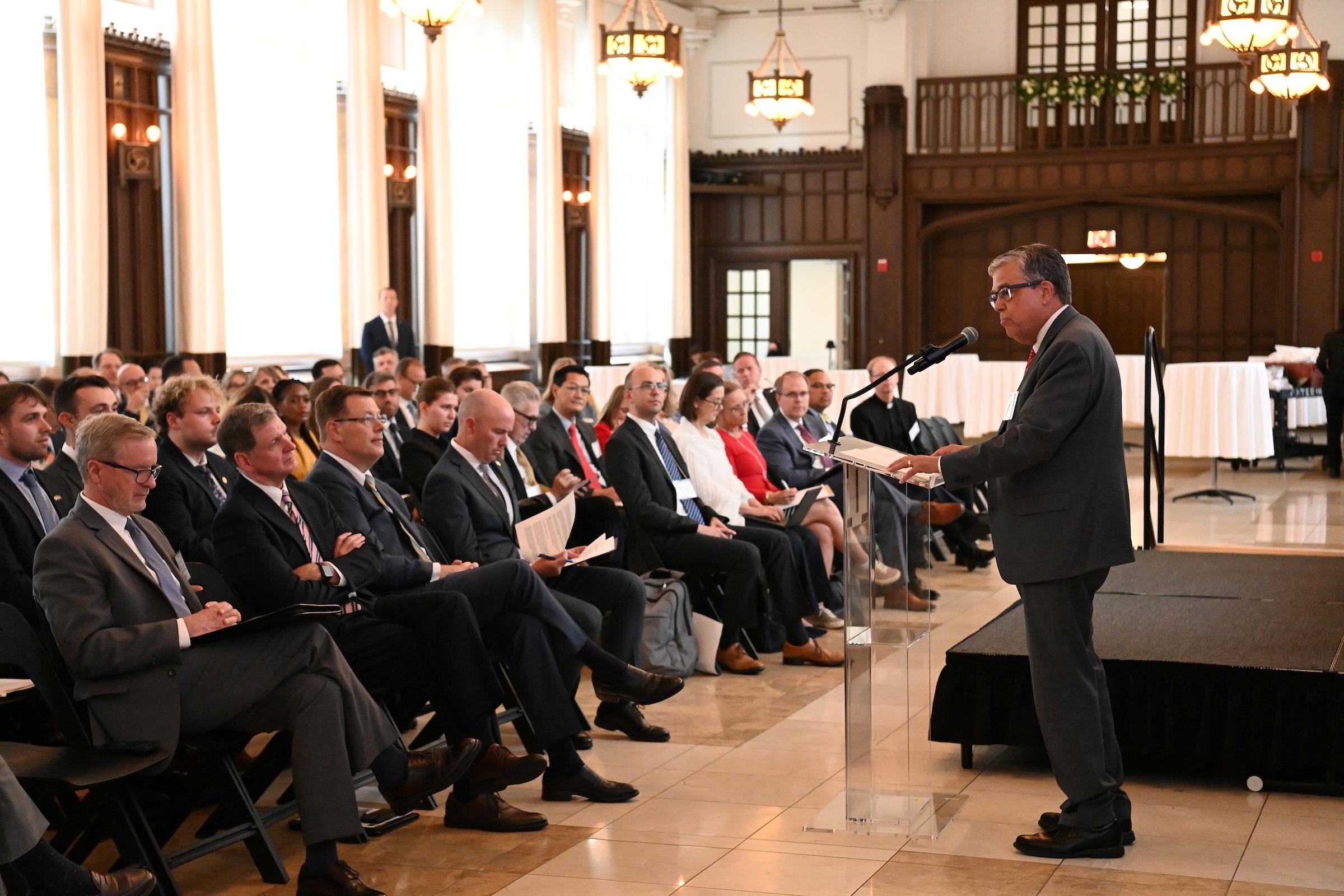
A group of senior leaders from the U.S. Department of Energy’s (DOE) Office of Environmental Management (EM) visited Catholic University’s Vitreous State Laboratory (VSL) in January 2026.
The group was led by Tim Walsh (assistant secretary for DOE-EM) and included Joel Bradburne (acting principal deputy assistant secretary); Alicia Stetin (chief of staff); John Howard (deputy chief of staff); Greg Sosson (associate principal deputy assistant secretary for field operations); Ray Geimer (manager, Hanford Field Office); and Darlene Prather (administrative officer).
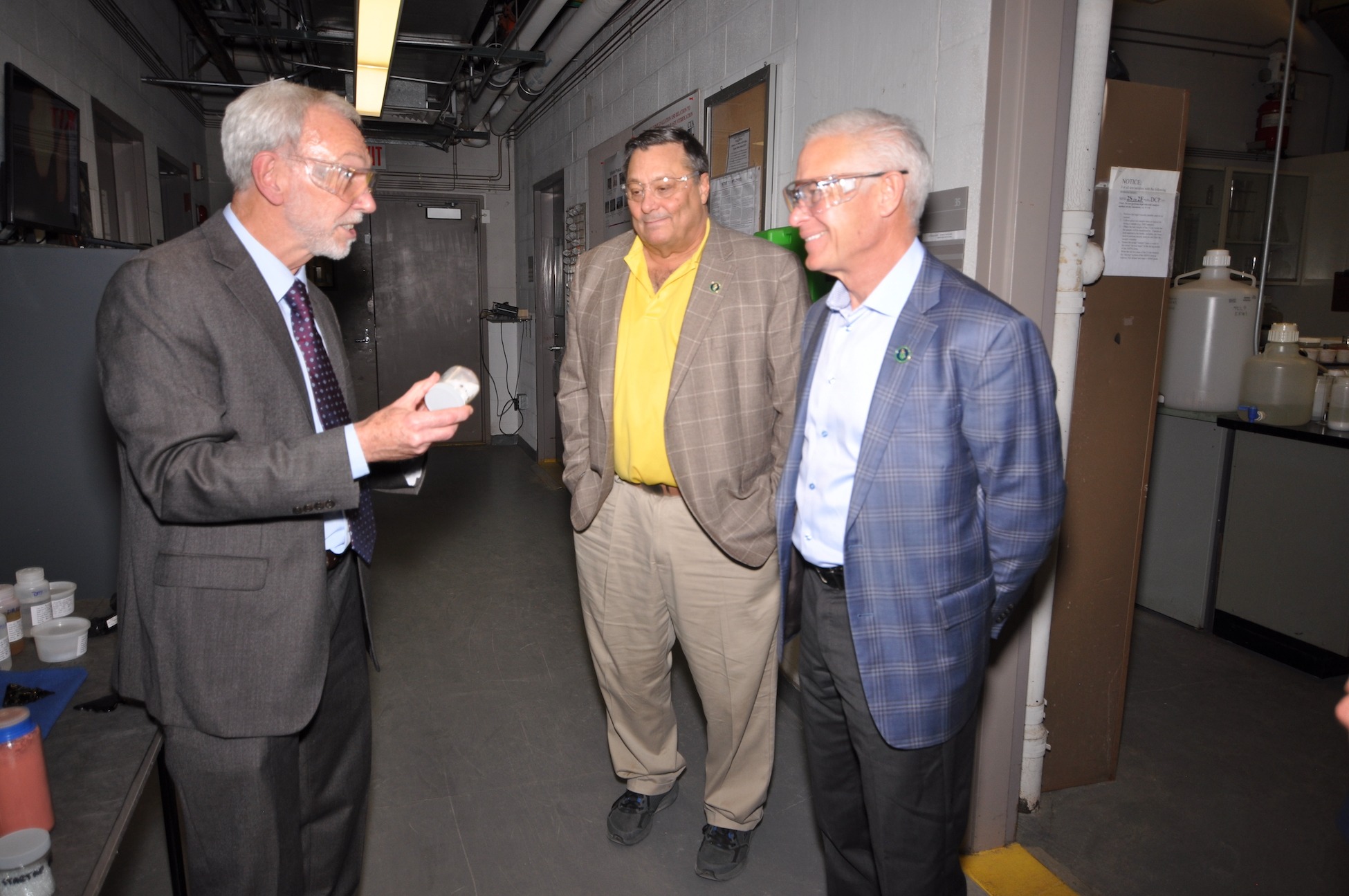
Walsh was confirmed by the Senate in October 2025 as the assistant secretary for EM, leading the largest environmental cleanup program in the world with an annual budget of more than $8 billion. The program is focused on the safe cleanup of multiple sites across the country after decades of nuclear weapons development and nuclear energy research. This involves treatment and disposition of huge volumes of accumulated nuclear waste and the decontamination and decommissioning of facilities – many of which date back to the Manhattan Project in the 1940s. VSL conducts research and development (R&D) to support this critical program.
Also joining the team for this DOE-VSL meeting were Jeff Kendall (president, U.S. Nuclear) and Brad Bowan (chief technology officer) from VSL’s long-time commercial partner, AtkinsRéalis, as well as Brian Coombe (HLW deputy project manager) from Bechtel.
VSL Director and Professor of Physics Ian Pegg led the tour, which began with a review of VSL’s history and past and present projects, the development of glass and grout waste forms, and glass formulation and melter operations enhancements related to the Hanford Tank Waste Treatment and Immobilization Plant (WTP). The WTP, the largest such facility in the world, is a DOE nuclear waste processing facility in Washington state that VSL has been providing R&D support for over 30 years. VSL’s work in support of other major DOE sites, including Idaho and Savannah River, was also discussed.
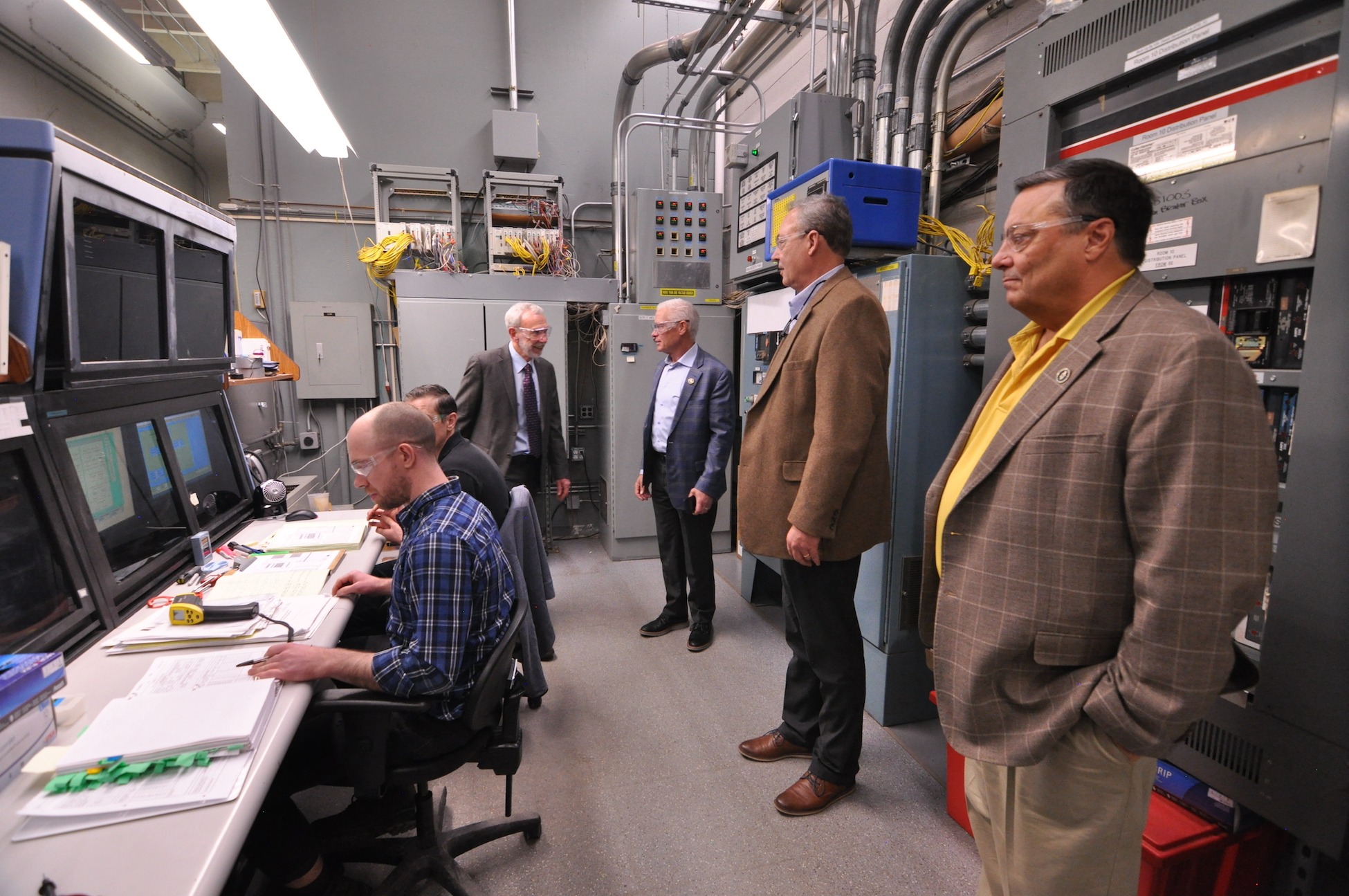
The senior leader-guests watched a demonstration of pouring molten simulated nuclear waste glass and also toured VSL’s unique array of prototypical test melters and integrated off-gas treatment systems. VSL is home to the largest such array in the United States, as well as the single largest test melter in the nation, the DM1200, which is the Pilot Melter for the Hanford WTP high level waste facility. The DM1200 operates at over 2000 degrees Fahrenheit and produces up to three tons of glass per day.
VSL experts have developed processes to more efficiently transform highly radioactive nuclear waste into stable glass that can be disposed of safely. VSL provides support to various nuclear facilities in the United States, Japan, and the United Kingdom.