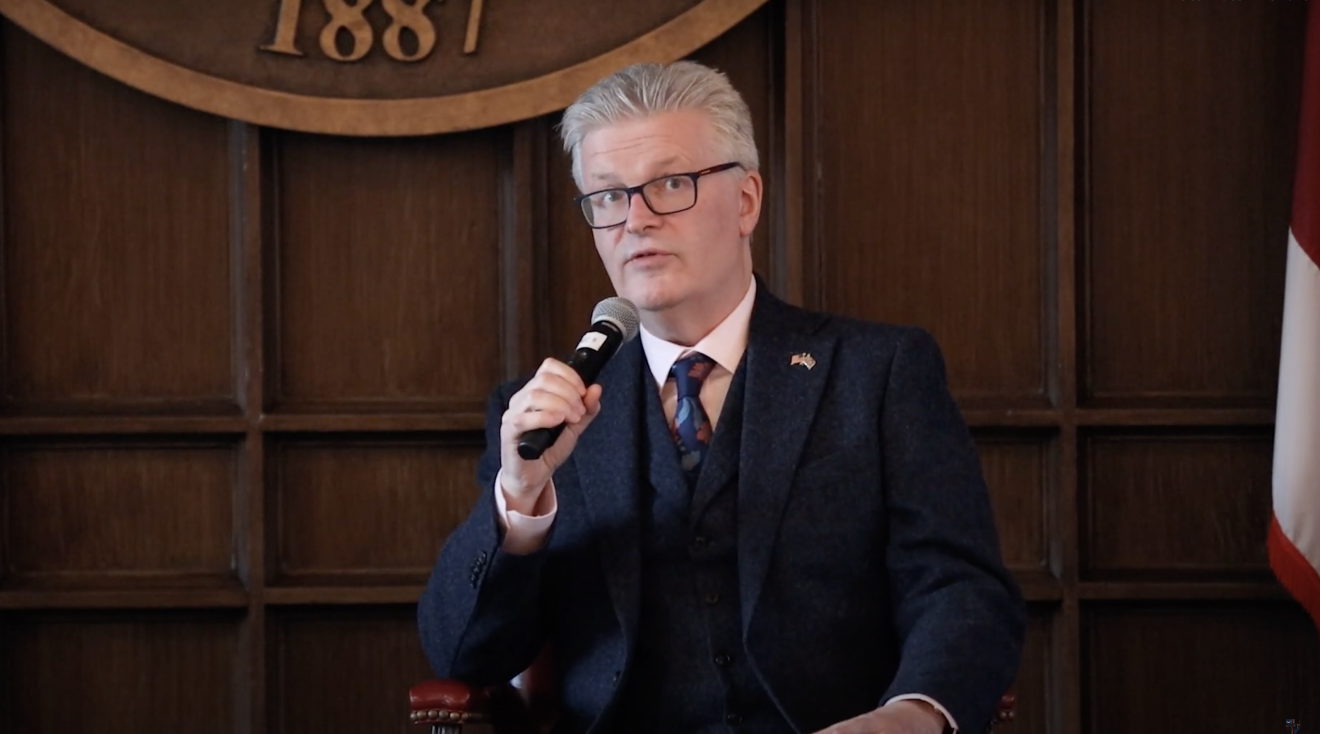
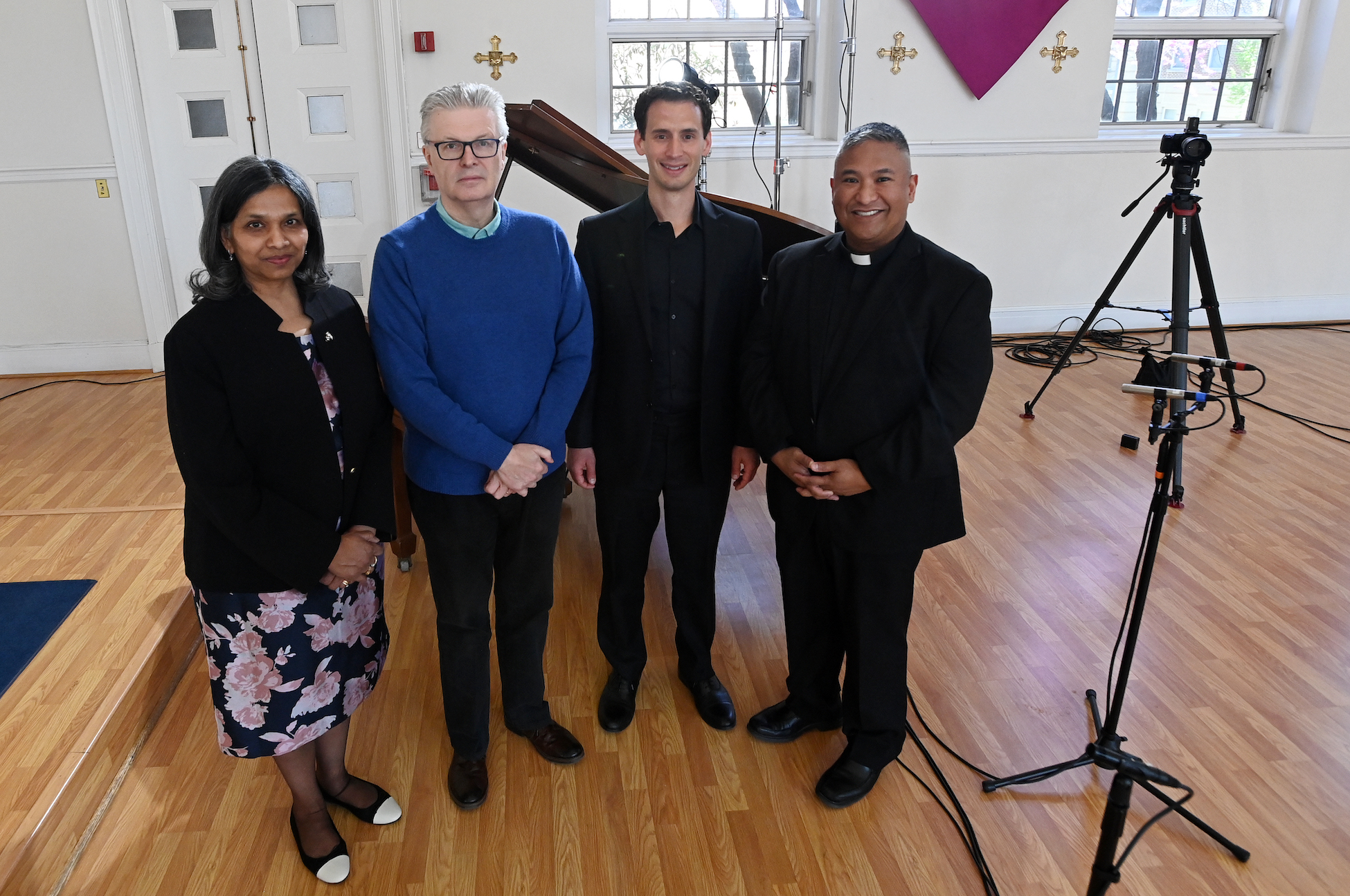
On a chilly April morning last semester, Sir James Macmillan, the world-renowned Scottish classical composer and conductor, sat inside St. Vincent Chapel, off to the side, relaxed and quietly taking in the scene. Technicians moved quickly across the floor of the chapel, checking cameras, connections, sound, and lighting. Purple Lenten banners cascaded down the walls of the chapel, and rich wood tones and brass organ pipes formed a backdrop for the University’s Chamber Choir, who stood assembled in front of the altar, dressed in performance attire, and focused on their conductor, Peter Kadeli. Very soon they would begin recording three of Macmillan’s compositions—in his presence.
With the preparations complete and the cameras recording, the first sounds swelled forth from the students, as they began to sing Macmillan’s “Be Who God Meant You to Be.” During a break in the recording, sophomore Carolyn Shaffer reflected on the piece’s oft-repeated refrain, “Be who God meant you to be.”
“Repetition in music signifies that something is important, and finding that repetition helps bring out the meaning,” she explained. “It brings you into a very spiritual head space and it’s very comforting; it’s very calming.”
That comforting and calming “spiritual head space” is more commonly known as prayer or worship, and that is the heart of the project Macmillan came to campus to support.
Welcoming Children in Worship: Learning to pray and worship
Macmillan was on campus as part of the Welcoming Children in Worship program, a Catholic University program funded by the Lilly Endowment Inc.'s Nurturing Children Through Worship and Prayer Initiative.
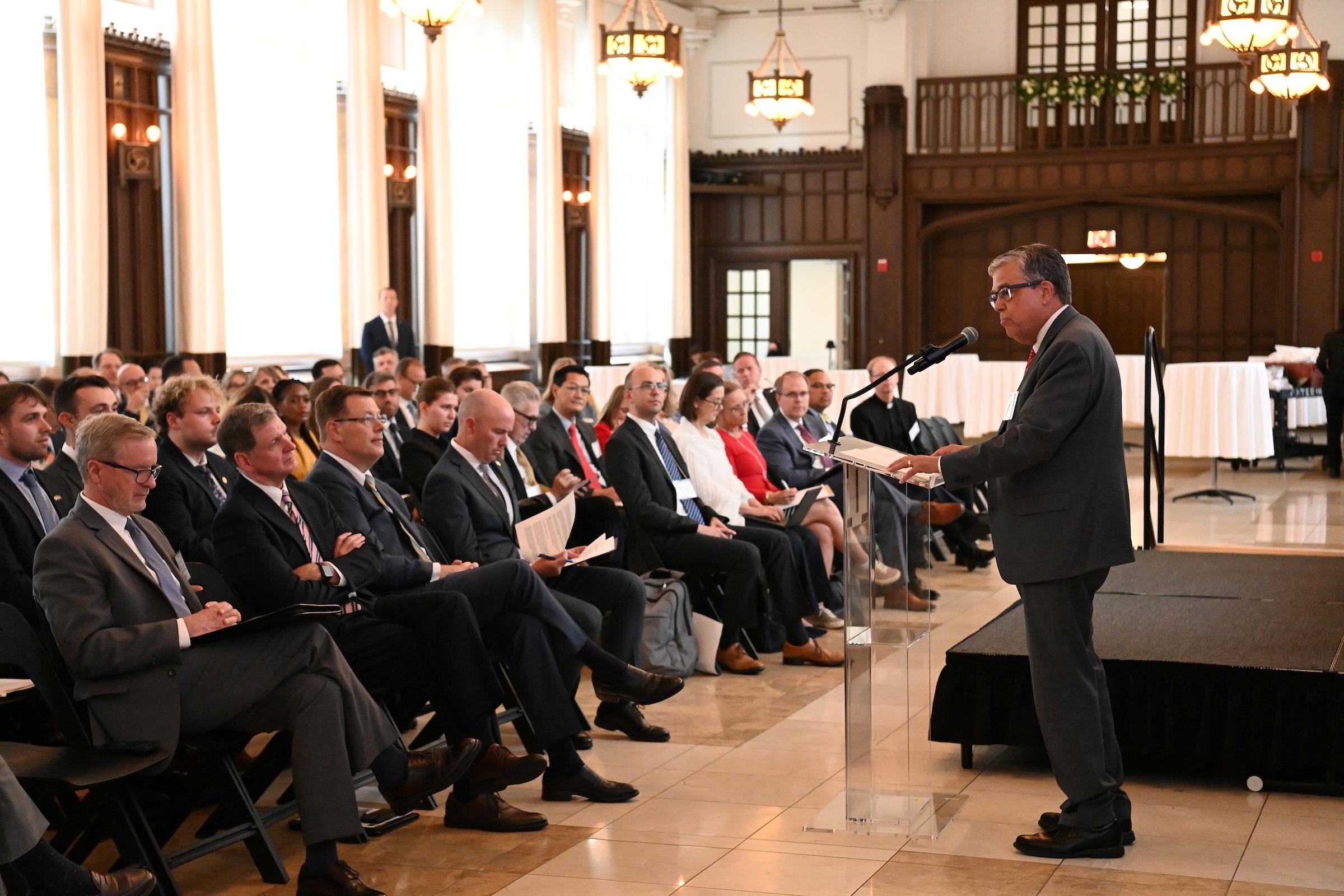
The primary purpose of his visit was to assist the program by recording a series of conversations on the topic of introducing children to sacred music. While here, he also participated in a public discussion with Peter Kadeli and a live recording session with the University Chamber Choir of three of his compositions, which will be used as an online resource for the program.
Led by Jem Sullivan, Ph.D., associate professor in the School of Theology and Religious Studies, the Welcoming Children in Worship program aims to develop an array of pastoral resources to help nurture and form children in worship and prayer in the Catholic tradition.
With the aid of the Lilly Endowment Inc. grant, the project collaborators are building a website that contains a range of resources for parents, pastors, catechists, liturgists, and teachers. These include formation resources on the meaning of liturgical signs, words, and gestures of worship; sacred music for worship and prayer; sacred art; and a “Shepherds Reflect” resource that contains reflections from Catholic bishops, priests, and scholars on the liturgical formation of families and children.
“We have about 1,600 subscribers from around the world currently on the website,” explained Sullivan, “and we put out regular communications to our subscribers. Every month we have new resources that we send out to this virtual community we’re building.”
In addition to faculty from the University’s School of Theology and Religious Studies, program collaborators include faculty from the University’s education and music programs and the International Center for Ward Method Studies, as well as Catholic University alumnus Father Phillip Ganir, S.J., of Boston College’s School of Theology and Ministry, who is a music consultant on the project.
Sullivan and her team also work with the Center for Applied Research in the Apostolate (CARA) and with pilot groups of Catholic educators and religious instructors in the Dioceses of Columbus and Bridgeport. CARA surveyed 189 dioceses to find out what types of resources practitioners in the field need to help them in the formation of children, and the pilot groups of Catholic educators and religious instructors in the dioceses gave feedback on the project resources and how they are using them.
“One thing that came out of that was the need to help liturgical musicians have a good sense of theology and the Church’s understanding of the importance of this music,” Sullivan recalled.
But how, the team wondered, would they accomplish this? As they were brainstorming, Father Phillip suggested creating something along the lines of Leonard Bernstein’s Young People’s Concerts, in which a composer speaks about the importance of music and of particular pieces of music.
“I knew James Macmillan and thought he’d be perfect,” said Sullivan. “He’s on an international stage, world-renowned, but so much of what he does is infused by his Catholic faith, and he has a keen attention to children.”
Macmillan accepted the invitation, and during his visit to campus the team recorded more than two days of conversations between him and Father Phillip, centered on this question: How do we introduce children to the rich repertoire of sacred music? Ultimately, the conversations will be released via a series of several videos that will be hosted as resources on the project website. The video recordings of the choir performing his compositions will be a complementary resource, providing music and performance inspiration for children’s choir directors and others.