By Shane MacDonald
In March 1790, the newly-inaugurated President George Washington wrote a response to a congratulatory note sent by Archbishop John Carroll of Baltimore (1735–1815) on behalf of the Roman Catholics of America. In his “Answer to the Roman Catholics of the United States of America,” Washington tells American Catholics that he hopes to see “America among the foremost nations in examples of justice and liberality” and that “fellow-citizens will not forget the patriotic part” that Catholics played in the Revolution.
It is in the spirit of this note that The Catholic University of America Special Collections took time this year to reflect on the Semiquincentennial of the United States, honoring the moment with an exhibit now on display in Mullen Library (through August 2026).
Since the nation’s inception, numerous citizens of different ethnic, religious, and regional groups have contributed uniquely to its development. Our focus in Special Collections is to provide the space and materials for studying the history of American Catholics — and in that capacity, we are well-equipped to reflect on Washington’s letter to U.S. Catholics in the 1790s.
Throughout the past 250 years, Catholics have sought to strengthen the connections between their Catholic and American identities. Like all groups, Catholics are not monolithic and have been on virtually every side in American history. From anti-slavery movements and labor organizations to civil rights and immigration, Catholics have been an active force in the nation’s development.
The exhibit we curated this year invites viewers to use each object as a starting point to ask questions about the definitions of American history, identity, values, and civics. The ultimate goal is to keep these conversations alive about what “American identity” is and what makes us a nation — ever-changing and yet rooted in core founding principles.
Inside the Exhibit
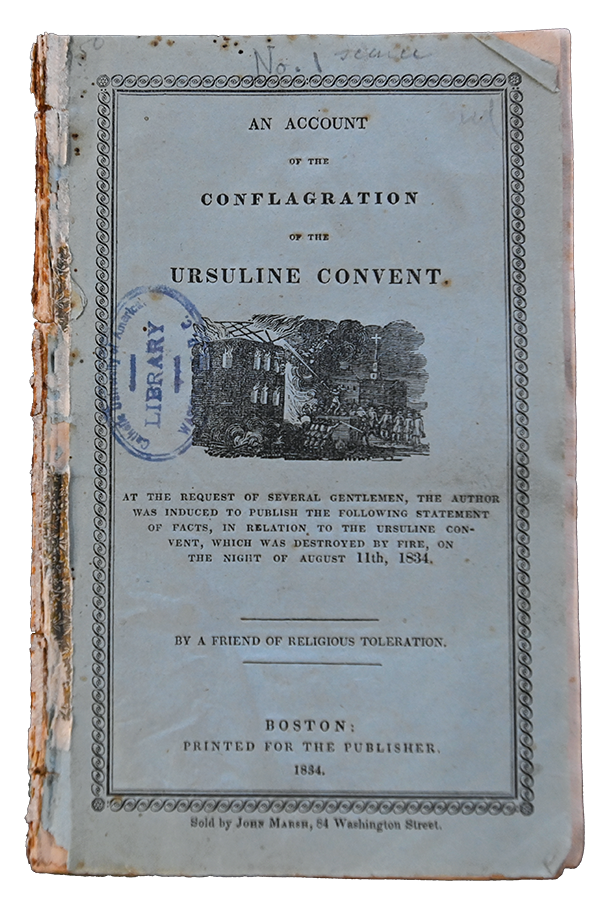
“An Account of the Conflagration of the Ursuline Convent” by a Friend of Religious Toleration, 1834
This pamphlet reflects on and condemns the events that led to the 1834 burning of a Massachusetts Ursuline Convent and school by an angry mob. Anti-Catholic and anti-immigrant rhetoric was inflamed in the 1830s. Following salacious rumors about the Ursulines, a crowd gathered outside the convent’s gates on August 11, 1834, and proceeded to burn down the building without interference from authorities. The Ursuline community fled to Quebec and New Orleans after this event.
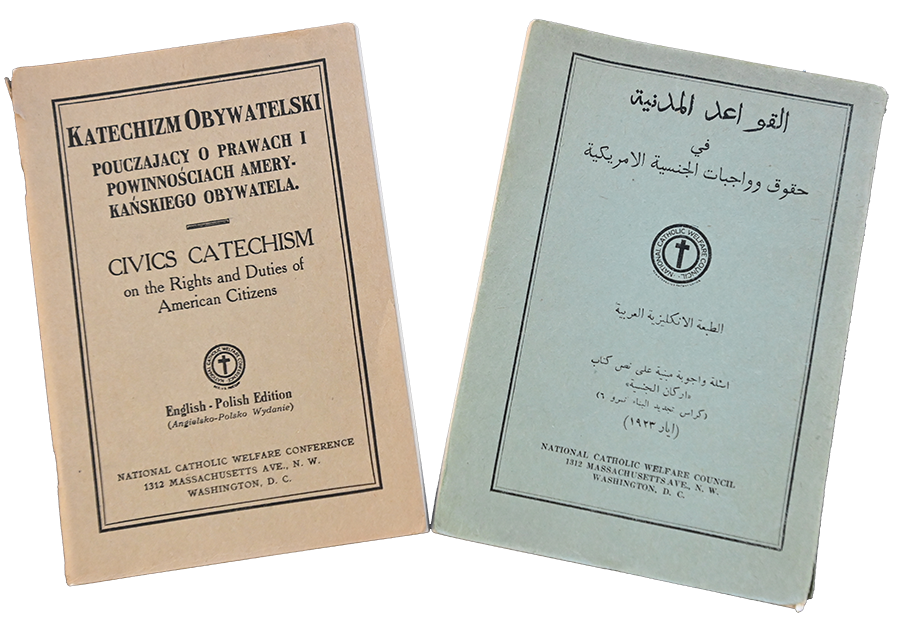
Civics Catechisms (Polish and Arabic), 1920
The National Catholic Welfare Conference (NCWC), predecessor to today’s USCCB, printed “civic catechisms” in numerous languages to provide civic education to newly-arrived immigrants in the 1920s. The NCWC worked against quota systems for immigrants, while striving to provide resources to bring new arrivals into the civic rights and responsibilities of U.S. citizens.
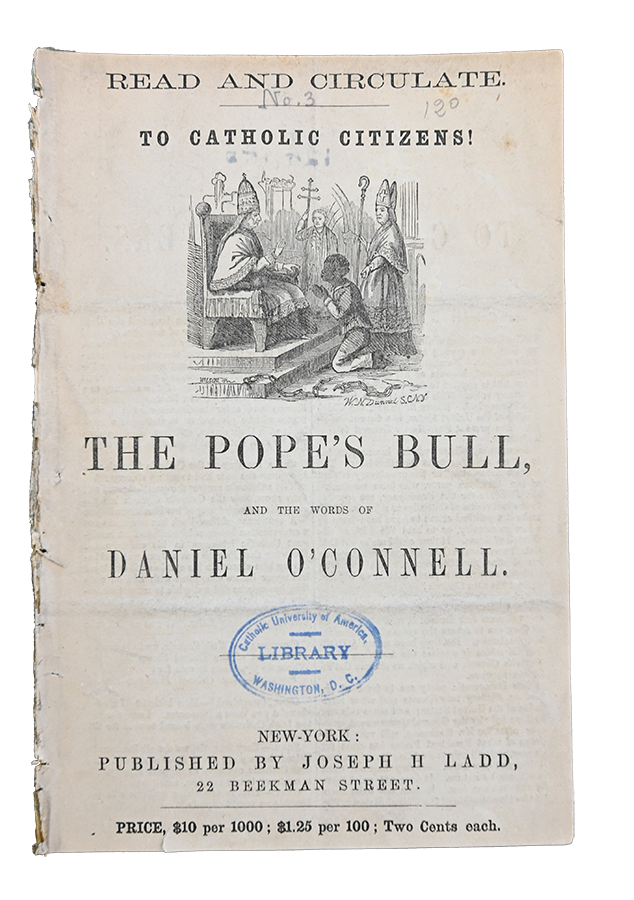
The Pope’s Bull, and the Works of Daniel O’Connell, 1858
As some Catholics engaged in the slave trade, others saw their faith as antithetical to the institution. This pamphlet, written to coincide with the 1858 presidential election, urges Catholic voters to oppose the expansion of slavery to western territories. It cites papal bulls and Catholic teaching to ascribe natural rights
to all humans and condemn enslavement.
Like other marginalized groups in the nation’s history, Catholic Americans have faced challenges of exclusion, othering, and violence. Immigration laws, attacks on religious houses and education, and myths about the loyalty of Catholic leaders persisted from Colonial times through the 20th century.
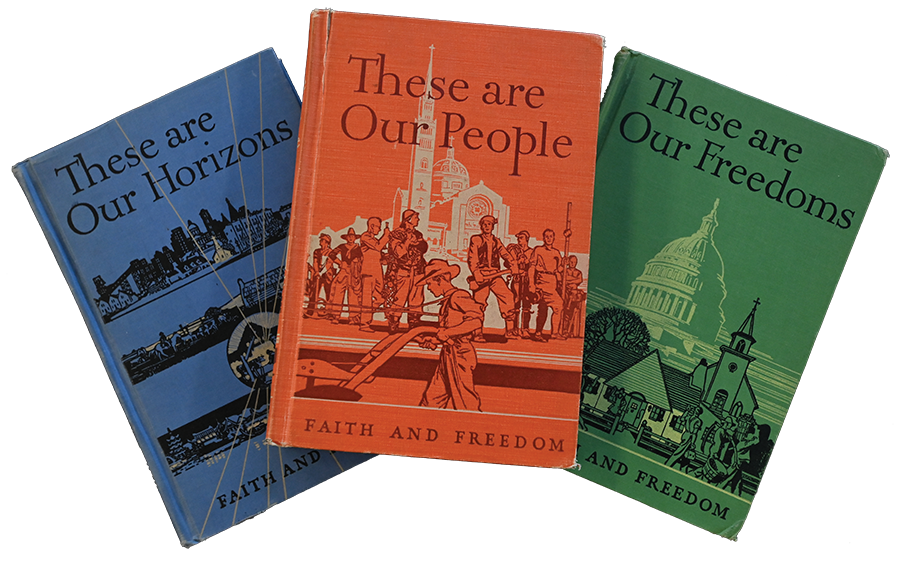
Commission on American Citizenship textbooks, 1940s
Beginning in 1938, Catholic University followed calls from the Vatican to link Catholic faith with civic education. The result was the Commission on American Citizenship, which produced a number of textbooks for parochial schools during the 1940s, linking American civic values with Catholic social teaching.
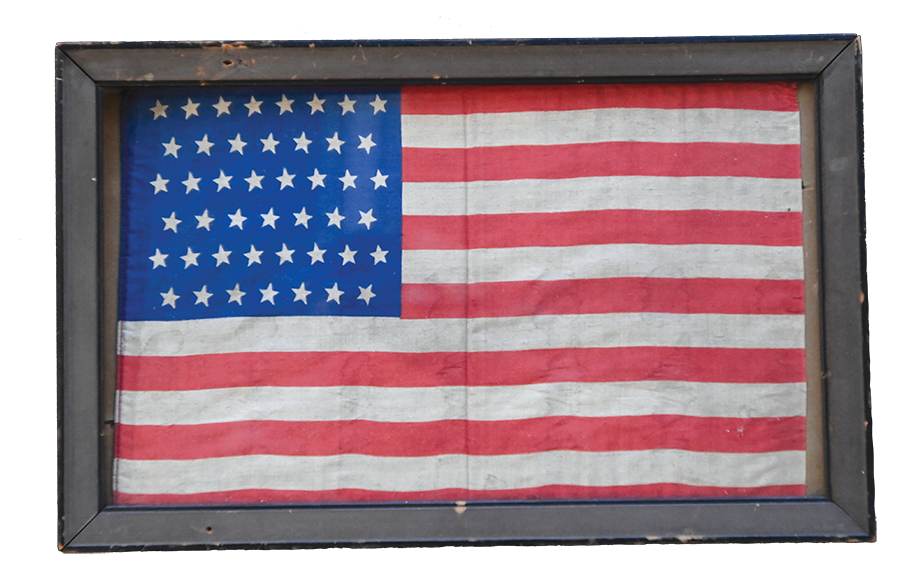
45-star American Flag, 1890s
This flag showcases the expansion of America, growing from 13 to 45 states by 1896. After the addition of Utah to the Union, this was the official flag from July 4, 1896, to July 3, 1908. It belonged to Terence V. Powderly, a Catholic labor leader and immigration official in the Gilded and Progressive eras and was flown during the Spanish-American War.